
Klarna vs PayPal instalment payment: Which provider is the better choice?

The world of online shopping has changed through Flexible payment options has changed fundamentally. Customers are often faced with the decision between different instalment payment providers, especially for larger purchases such as high-quality human hair extensions. Klarna and PayPal dominate the German market and both offer attractive "Buy Now, Pay Later" solutions. But which provider performs better in a direct comparison? This comprehensive guide analyses both services in terms of costs, security, functions and user-friendliness.
What do Klarna and PayPal offer for payment by instalments?
Klarna's instalment payment model
Klarna has established itself as a pioneer in the "Buy Now, Pay Later" sector and offers various payment options. The Klarna instalment payment allows customers to pay for their purchases in 6, 12 or up to 24 monthly instalments. The classic purchase on account with a 30-day payment term and the "pay now" option are also particularly popular.
The Swedish payment service provider scores highly with its seamless integration into over 90,000 online shops worldwide. Customers can decide how they want to pay directly at checkout, without prior registration or complicated login processes.
PayPal's instalment payment service
PayPal also offers flexible payment options with "Payment by instalments powered by PayPal". Customers can divide purchases from 99 euros into 3 to 24 monthly instalments. The service is integrated into the familiar PayPal ecosystem, allowing users to enjoy their usual security and established buyer protection.
A key advantage of PayPal is its international reach: the service is available in over 200 markets and supports more than 100 currencies. This makes PayPal particularly attractive for cross-border transactions.
Cost comparison: Interest and fees in detail
Interest costs with Klarna
With the Klarna instalment payment The interest rates vary depending on the term and creditworthiness of the customer. The APR is typically around 13.6% for a two-year term. A purchase of 1,000 euros would incur interest of around 138 euros over 24 months.
Klarna does not charge any processing fees for instalment payments, but late payments may incur reminder fees of up to 35 euros per transaction.
PayPal instalment payment costs
PayPal is slightly more favourable in terms of interest costs: the APR is around 10.99% for longer terms. The same 1,000 euro purchase would incur around 115 euros in interest over 24 months - around 23 euros less than with Klarna.
PayPal also does not charge any processing fees, but in the event of payment defaults, similar reminder costs may be incurred as with Klarna.
Comparison with traditional bank loans
Both providers are significantly more expensive than conventional instalment loans from banks. According to calculations by Stiftung Warentest, Klarna's costs can be up to 86% higher than a comparable bank loan, while PayPal's costs are still 51% higher. This makes both services expensive financing options for larger purchases.
Which is better: Klarna or PayPal?
Security and buyer protection
PayPal offers comprehensive buyer protection. The established arbitration procedure and many years of experience in the area of online payments create trust. In the event of problems with orders, customers can claim their money back relatively easily.
Klarna relies on automated processes and works closely with the participating shops. Buyer protection is available, but less comprehensive than with PayPal. On the other hand, Klarna scores with transparent communication about payment dates and purchase history.
User-friendliness and app experience
Klarna impresses with an intuitive app that clearly displays all purchases and payments. Integration into online shops is seamless and customers can make purchases without prior registration.
PayPal also offers a user-friendly app, but the instalment payment is more of an additional function than a core product. The integration is solid, but not quite as elegant as with Klarna.
Acceptance by retailers
Both providers are widely used, but PayPal is more widely accepted due to its longer market presence. However, Klarna is catching up quickly, especially in the fashion and lifestyle sector.
Klarna PayPal instalment payment: Combined use
It is interesting to note that the two services do not have to be mutually exclusive. Many online shops offer both Klarna and PayPal as payment options, allowing customers to choose the option that suits them best.
Strategic utilisation of both providers
Experienced online shoppers often use both services strategically:
- Klarna for smaller purchases and when an immediate purchase decision is made
- PayPal for larger purchases and international purchases
This approach makes it possible to optimally utilise the strengths of both providers and at the same time diversify the risk.
Effects on creditworthiness
Both providers carry out credit checks, but with different approaches:
Klarna's credit check
Klarna carries out a Schufa enquiry on first use, but this is considered a "soft" enquiry and does not affect the Schufa score. Negative entries are only made in the event of payment problems.
PayPal's credit check
PayPal works together with various credit agencies and also carries out credit checks. The impact on the Schufa score is minimal, similar to Klarna, as long as payments are made on time.
Legal aspects and right of cancellation
Right of cancellation for purchases in instalments
With both providers, customers have a 14-day right of cancellation from the conclusion of the contract. This applies both to the purchased product and to the instalment contract itself.
Data protection and consumer protection
Klarna and PayPal are both subject to the European General Data Protection Regulation (GDPR). PayPal has established data protection practices due to its longer market presence, while Klarna, as a newer provider, has implemented modern data protection standards from the outset.
Alternatives to Klarna and PayPal
Traditional financing options
For larger purchases, traditional instalment loans from banks can be a more cost-effective alternative. Online comparison portals can help you find favourable conditions.
Other buy-now-pay-later providers
In addition to Klarna and PayPal, other providers such as Afterpay, Sezzle and Affirm are establishing themselves on the German market. Some of these offer different conditions or specialised solutions for certain industries.
Tips for responsible use
Budget planning and maintaining an overview
No matter which provider you choose: Always keep track of your monthly commitments. Both services offer apps and online access to make it easier to keep track of your finances.
Utilise early repayment
Both Klarna and PayPal allow early repayment without an early repayment penalty. This can significantly reduce interest costs.

Conclusion: Which provider is right for you?
The decision between Klarna and PayPal depends on your individual needs. PayPal is better suited to customers who make international purchases, value established buyer protection and prefer slightly lower interest rates. Klarna scores with its intuitive operation, seamless shop integration and transparent communication.
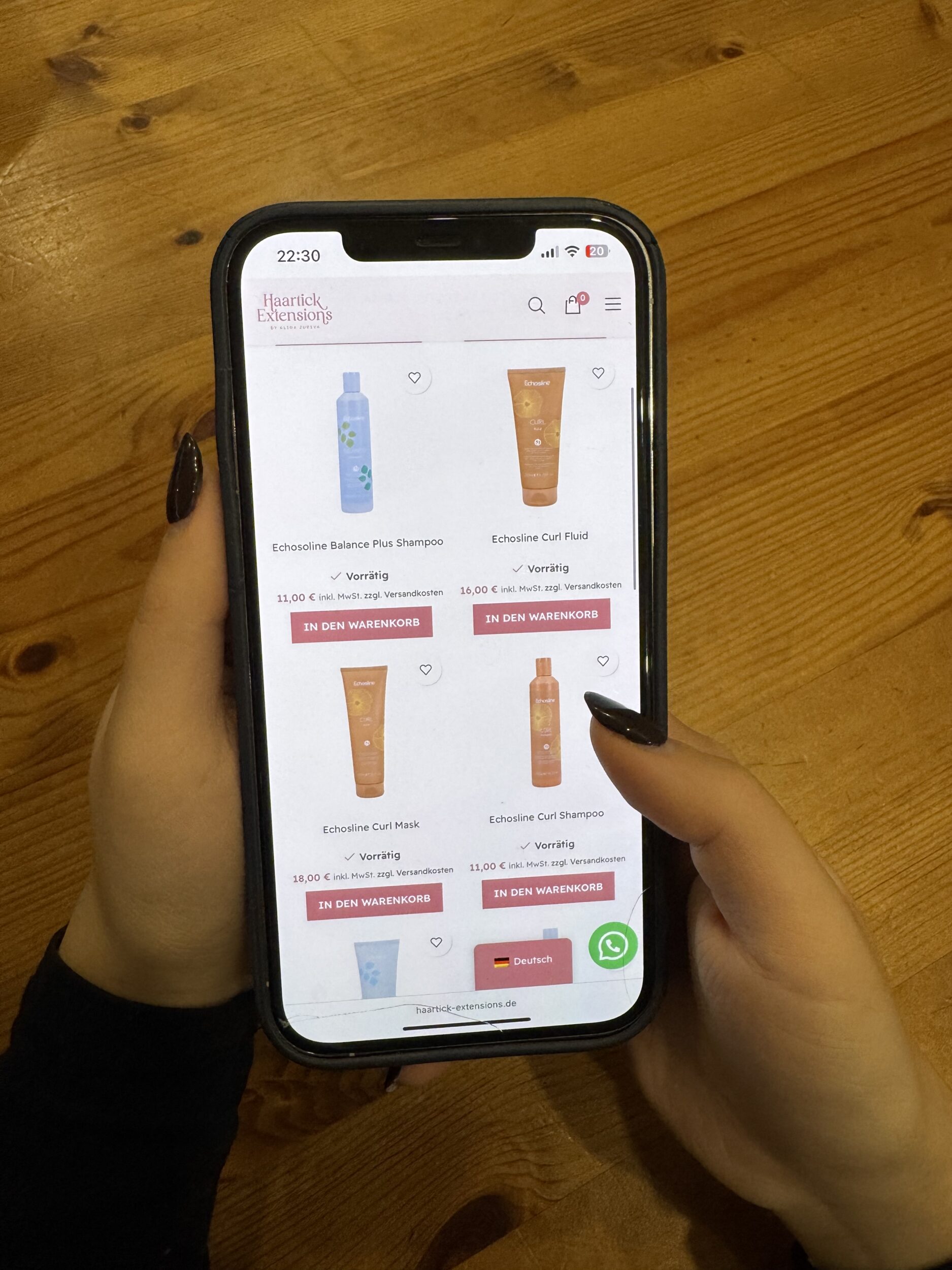
For high-quality purchases such as professional human hair extensions at Hair stick extensions however, you should always check whether a classic instalment payment or a bank loan is not the more cost-effective alternative. At Haartick Extensions, you benefit from transparent prices and expert advice that can help you decide on the right payment option.
Make an appointment at the Königswinter salon now and get advice on flexible payment options for your dream hair!
Frequently asked questions
How long does the authorisation take with Klarna vs PayPal?
Both providers usually decide on the authorisation in real time. Klarna typically takes a few seconds, PayPal also, but can take up to a few minutes for new customers.
Can I repay early with both providers?
Yes, both Klarna and PayPal allow free early repayment without an early repayment penalty.
What happens in the event of payment problems?
Both providers offer goodwill solutions, but can charge reminder fees and make negative credit entries in the event of repeated problems.
Are there minimum or maximum amounts?
Klarna usually finances from 35 euros, PayPal from 99 euros. The maximum amounts are individual and depend on creditworthiness.
Which provider is more secure?
Both providers are considered secure, but PayPal has a slight advantage in terms of security due to its longer market presence and more comprehensive buyer protection programmes.
 English (UK)
  Deutsch
  Русский
  Italiano
  Français
  Nederlands
  Español