
Tangles in extensions - why they occur & how to prevent them

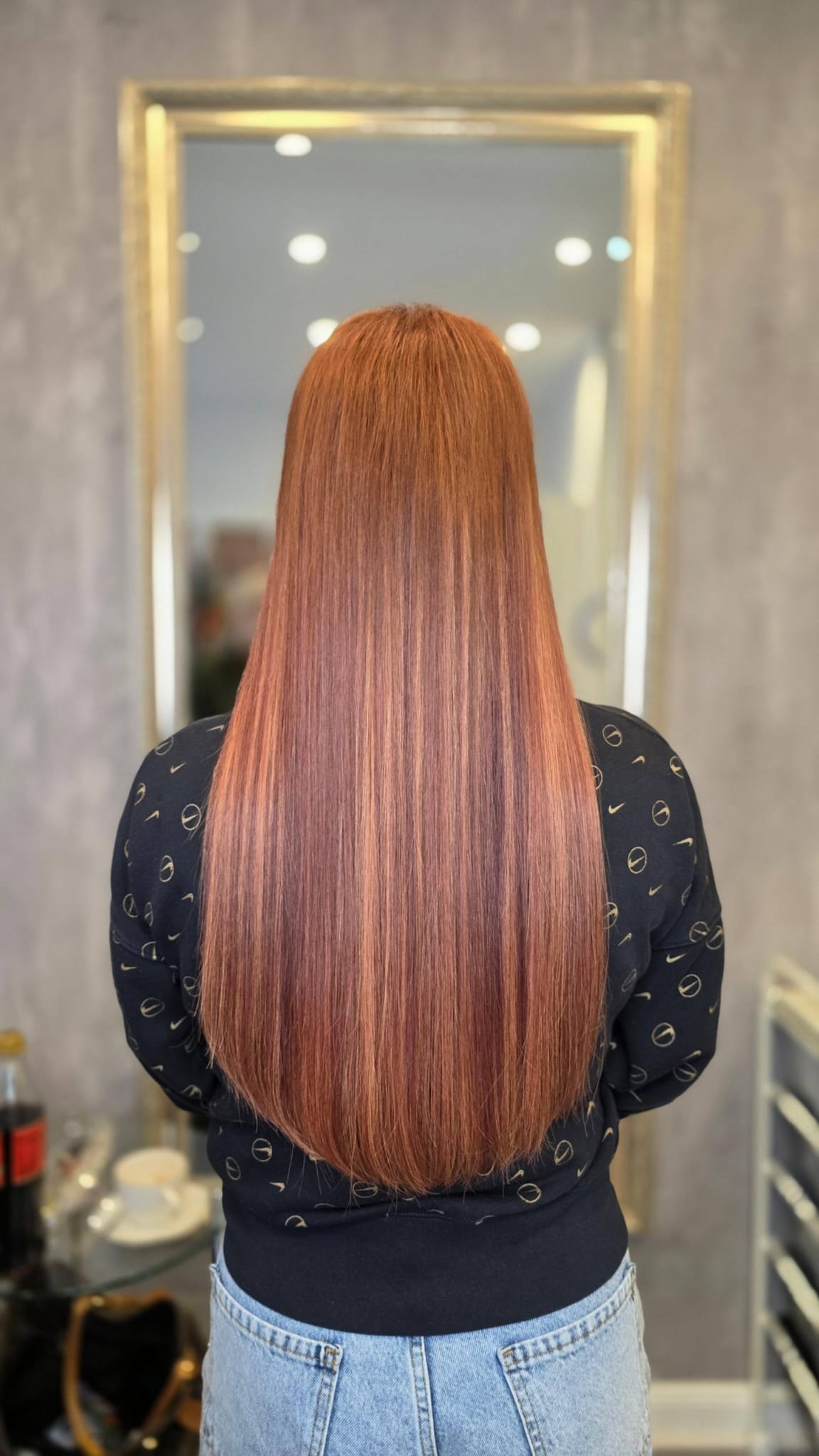
Tangles are one of the most common problems with hair extensions - and are also one of the main reasons why extensions have to be removed prematurely or do not feel comfortable.
The good news is that tangles are avoidable in most cases if you know why they occur and how to deal with them properly.
In this article we explain:
- Why extensions get matted at all
- which mistakes are made particularly frequently
- how you can effectively prevent tangles
- and what you should do if they have already occurred
What exactly are tangles in extensions?
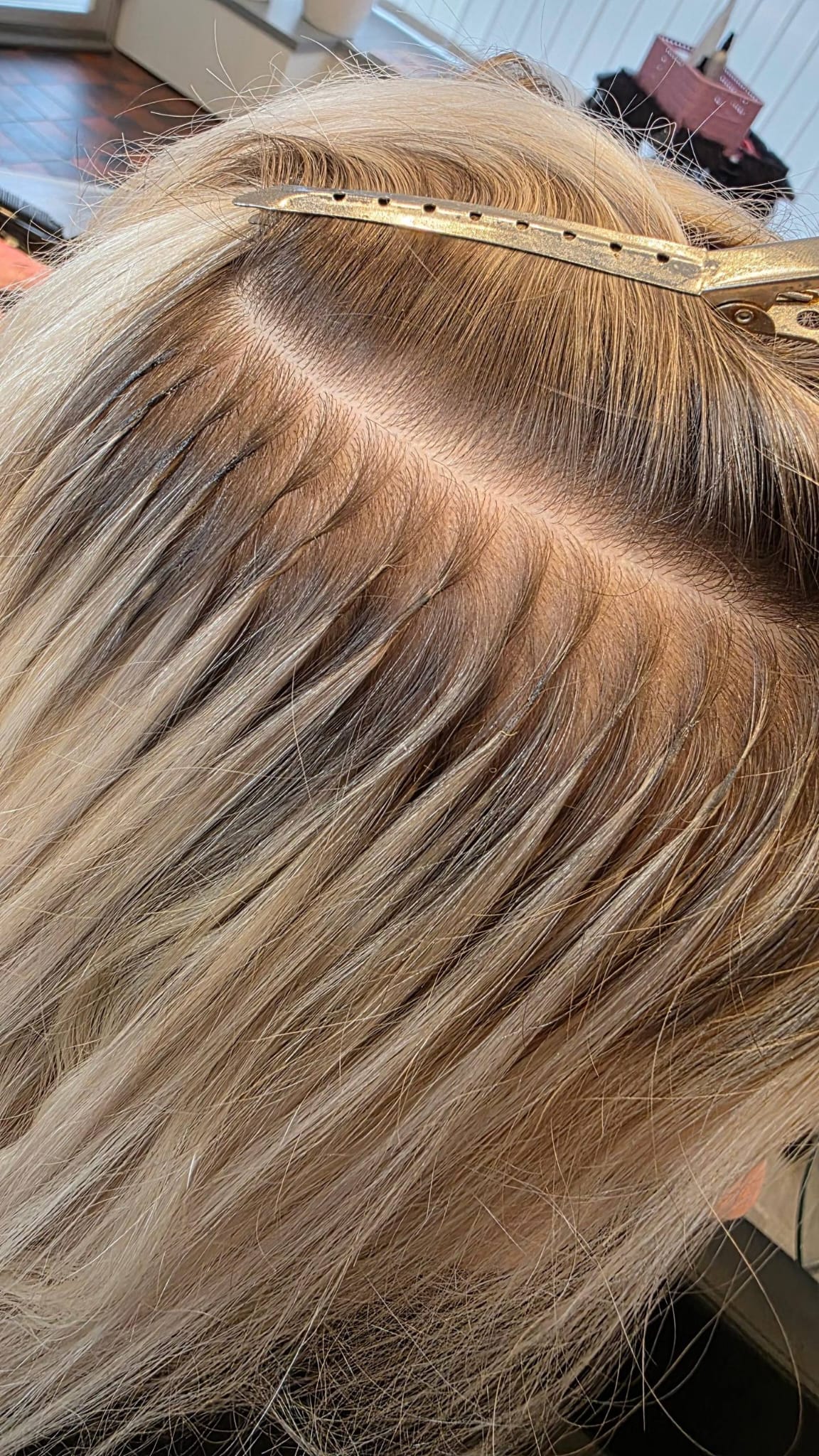
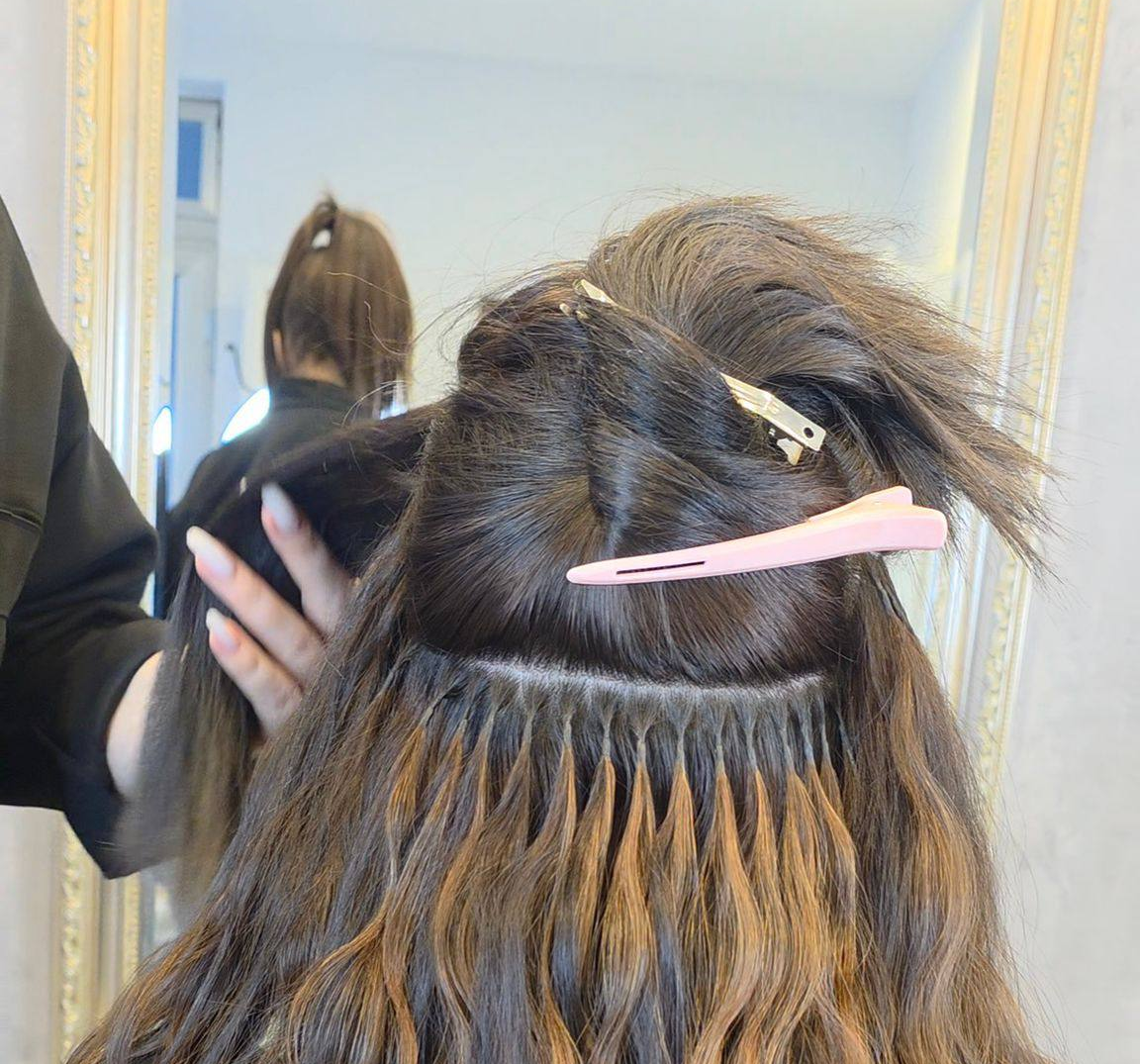
Tangles usually occur at the roots, i.e. where your own hair meets the extensions.
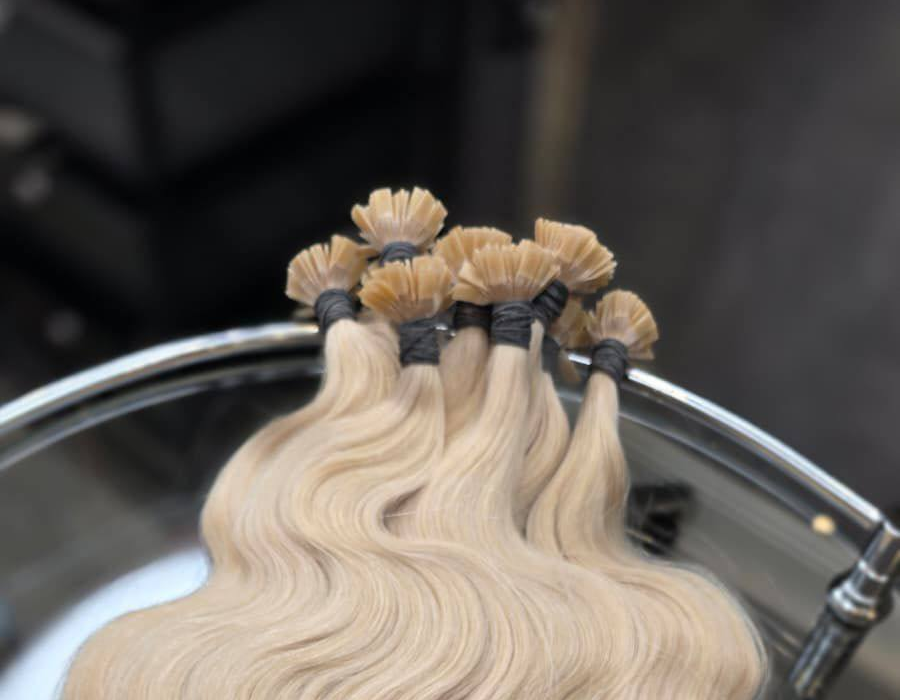
Hair that has fallen out gets caught in the bondings, tapes or connection points and mixes with regrowing hair.
Over time, they form:
- small nodules
- Loops
- dense hair cushions
- in the worst case, solid tangles
These feel:
- hard on
- pull when brushing
- can hardly be separated
Why do extensions become matted? - The most common causes
1. natural hair loss
Every person loses about 100 hairs a day.
With extensions, these hairs do not simply fall out, but remain in the connection point.
Without regular inspection and care, they accumulate.
2. no or too infrequent cleaning cut (free cut)
The most important point!
After 6-8 weeks, a cleaning cut must be carried out on bondings, in which:
- hair that has fallen out is removed
- Bondings are controlled
- loops can be released
If this date is omitted Entanglements are almost pre-programmed.
3. incorrect or too infrequent brushing
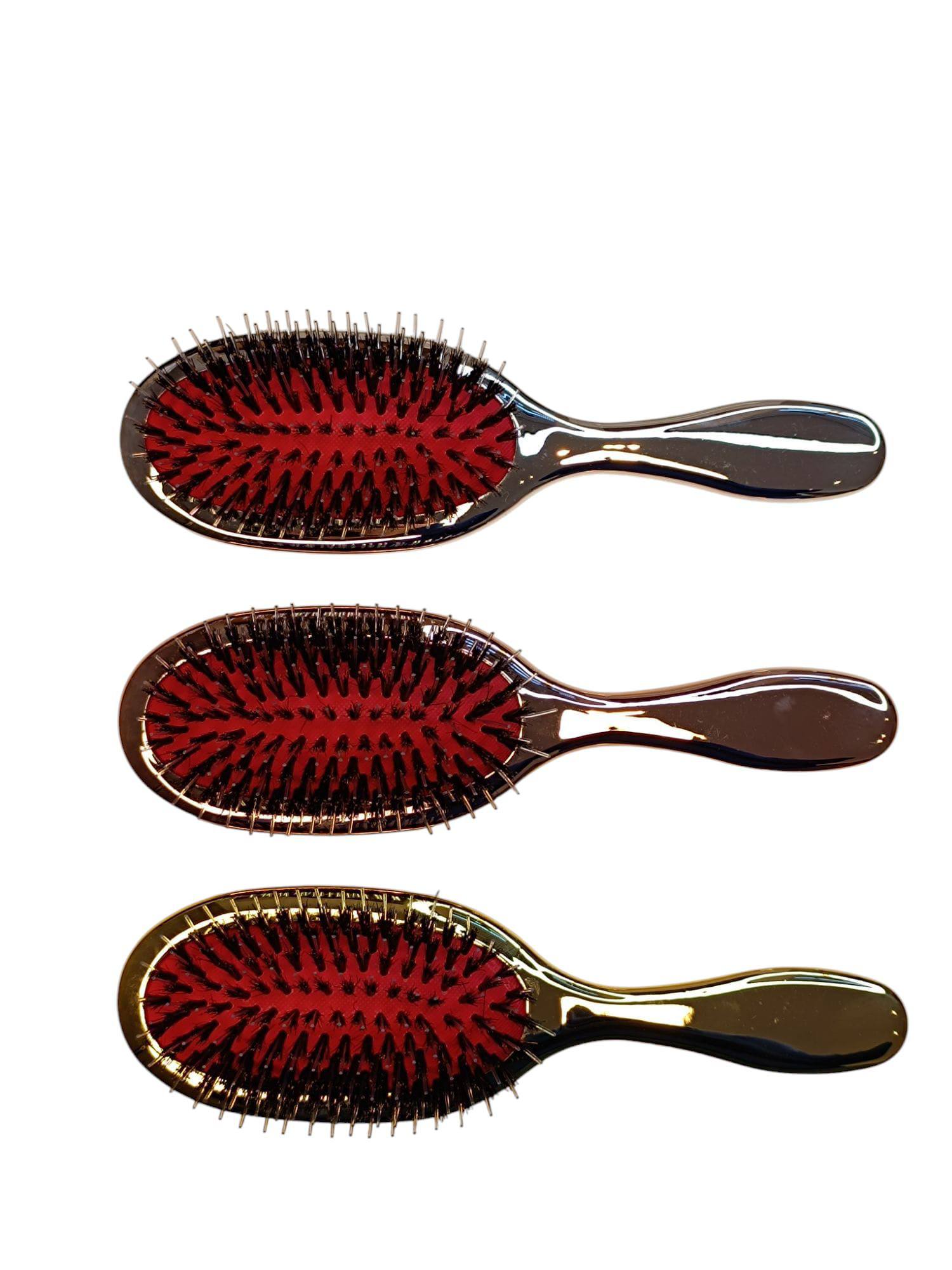
- Brushing too seldom
- Wrong brush
- Pulling too roughly
cause hair to collect and knot at the roots.
Recommendation:
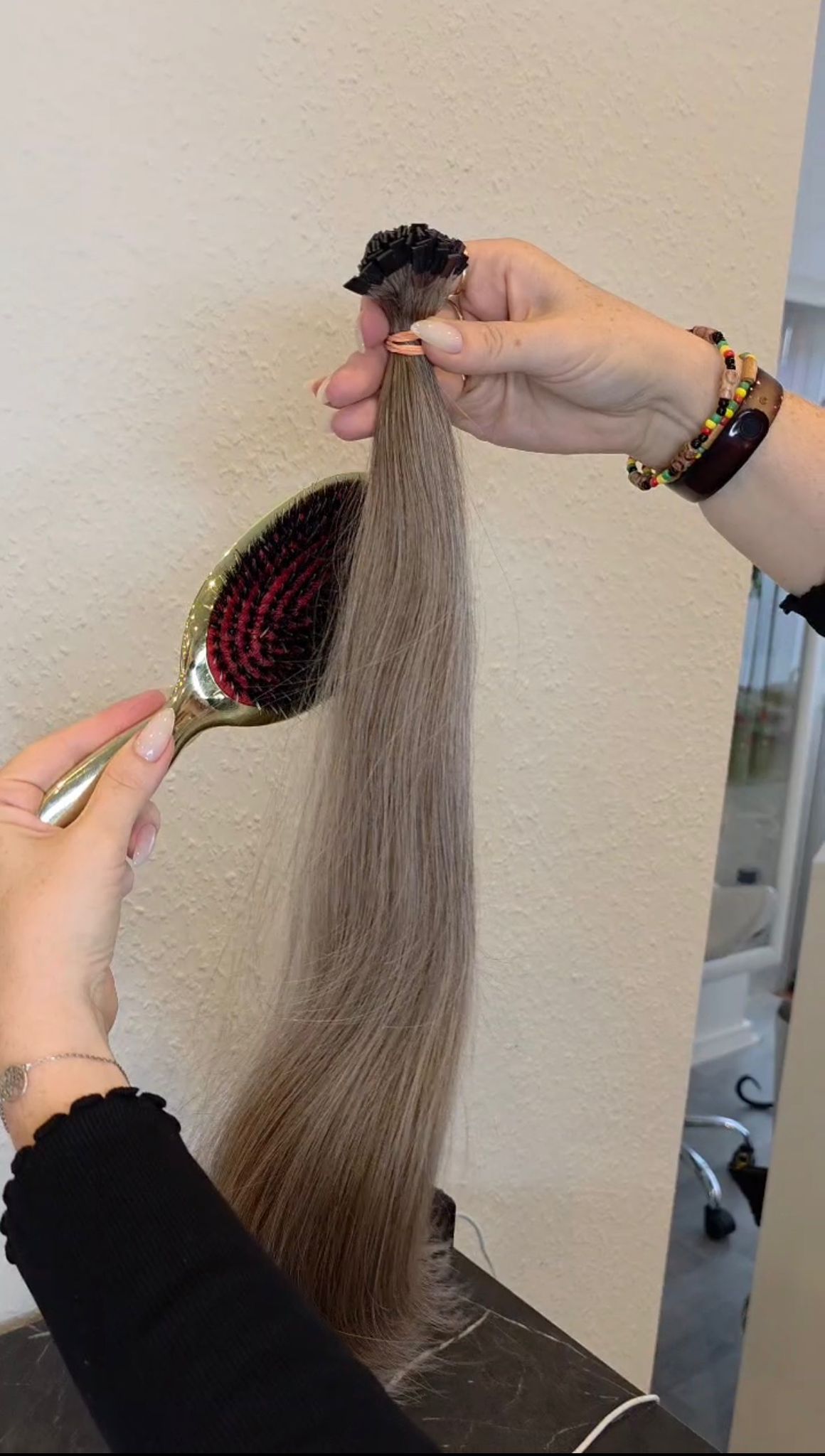
✔ Brush 2-3 times a day
✔ Always work from the tips upwards
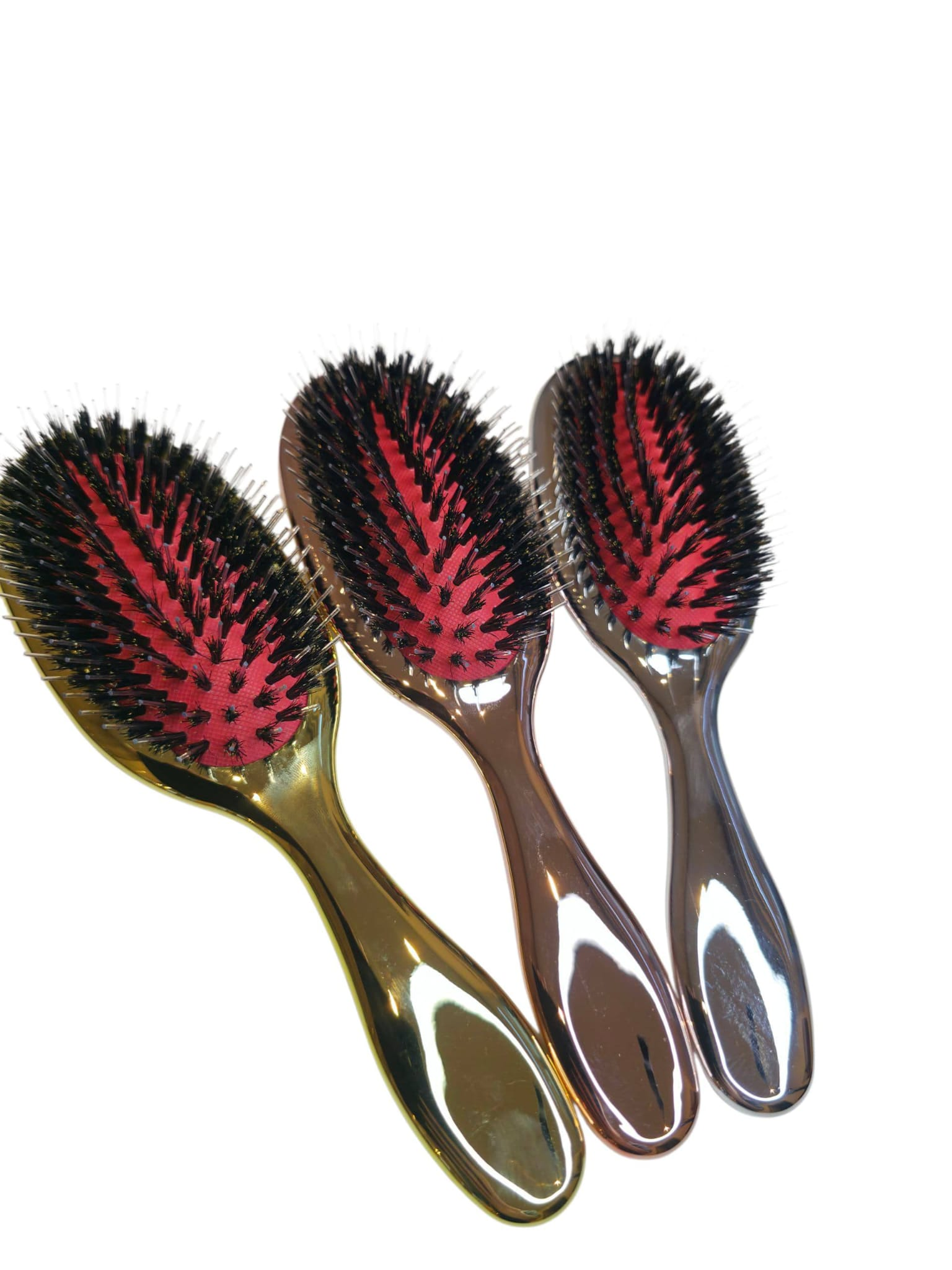
✔ Only use extension brushes
4. sleeping without protection
At night, strong friction is caused by movement.
Without:
- Plait or braided hairstyle
- Silk or satin pillowcase
the hair becomes knotted particularly quickly.
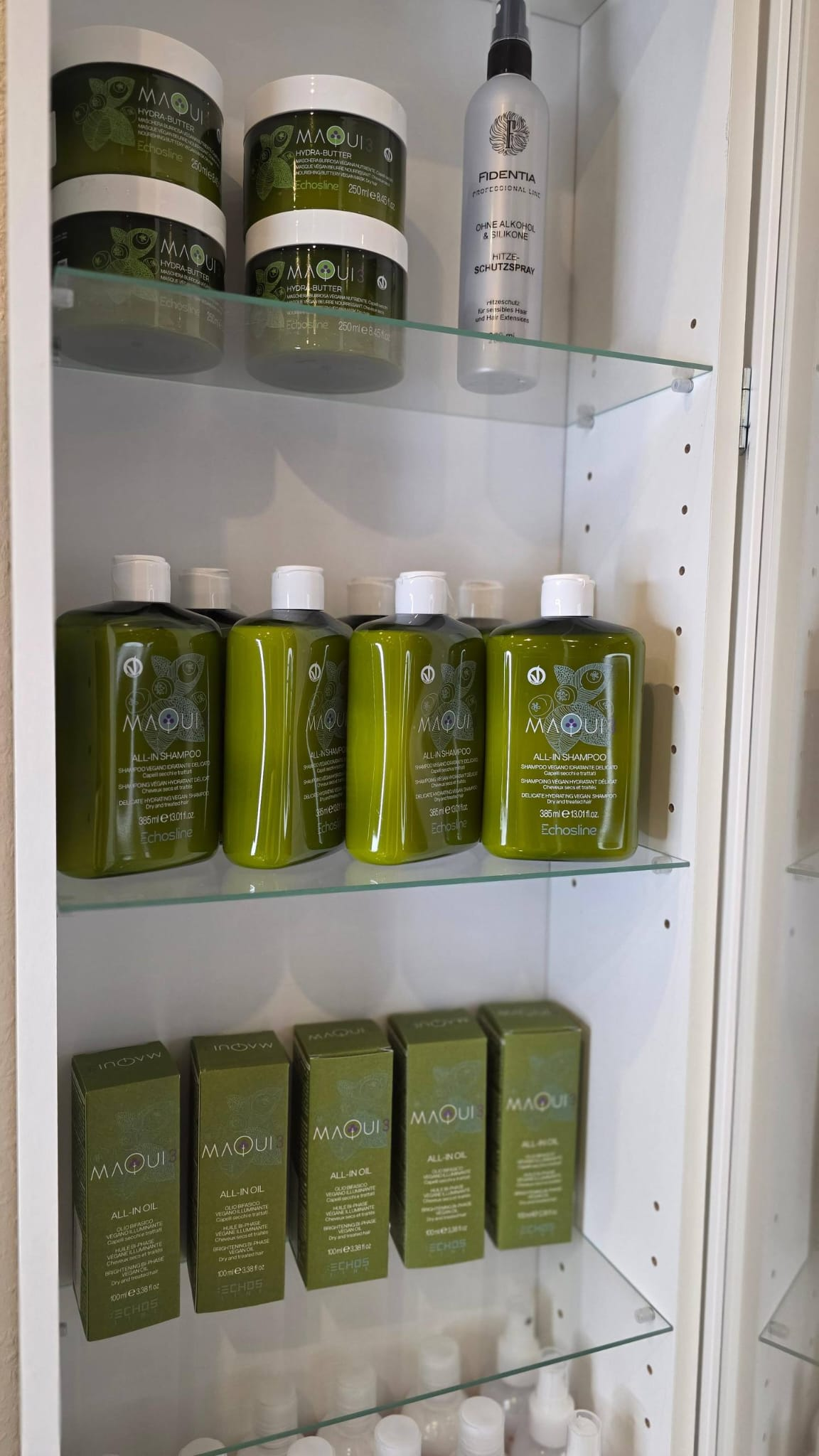
5. wrong care products
Unsuitable products may:
- dry out the hair
- Increase friction
- Favour knotting
Particularly problematic:
Anti-dandruff shampoos
❌ Deep cleansing shampoos
Products containing alcohol
❌ Care products with sulphates, parabens or silicones
6. incorrect washing frequency
If the hair is washed too rarely or too often:
- collect sebum & dirt
- Hair sticks together or is far too dry
- the base becomes "sticky"
This encourages loops and tangles.
What to do if tangles have already formed?
Very important: Do not tear by force and do not cut yourself!
You should do that:
- arrange a check-up appointment in the salon immediately
- Have tangles professionally removed
- if necessary, move or renew individual strands
The earlier the reaction, the better the natural hair can be saved.
✅ How you can effectively prevent tangles
1. regular cleaning cut
✔ every 6-8 weeks
✔ usually only takes 30-60 minutes
✔ protects extensions & natural hair
2. the right care

- Sulfate-, paraben- and silicone-free care products
- Do not wash or style extensions upside down
- Sort and separate individual bondings regularly
3. sleep properly
- Brush your hair before sleeping
- Plait or braided hairstyle
- Silk pillowcase
4. regular brushing
- in the morning
- during the day
- in the evening
5. professional support
need extensions:
- Control
- Care
- Readjustment
A good extension salon will accompany you throughout the entire wearing period.
Conclusion: tangles are not destiny - they are avoidable
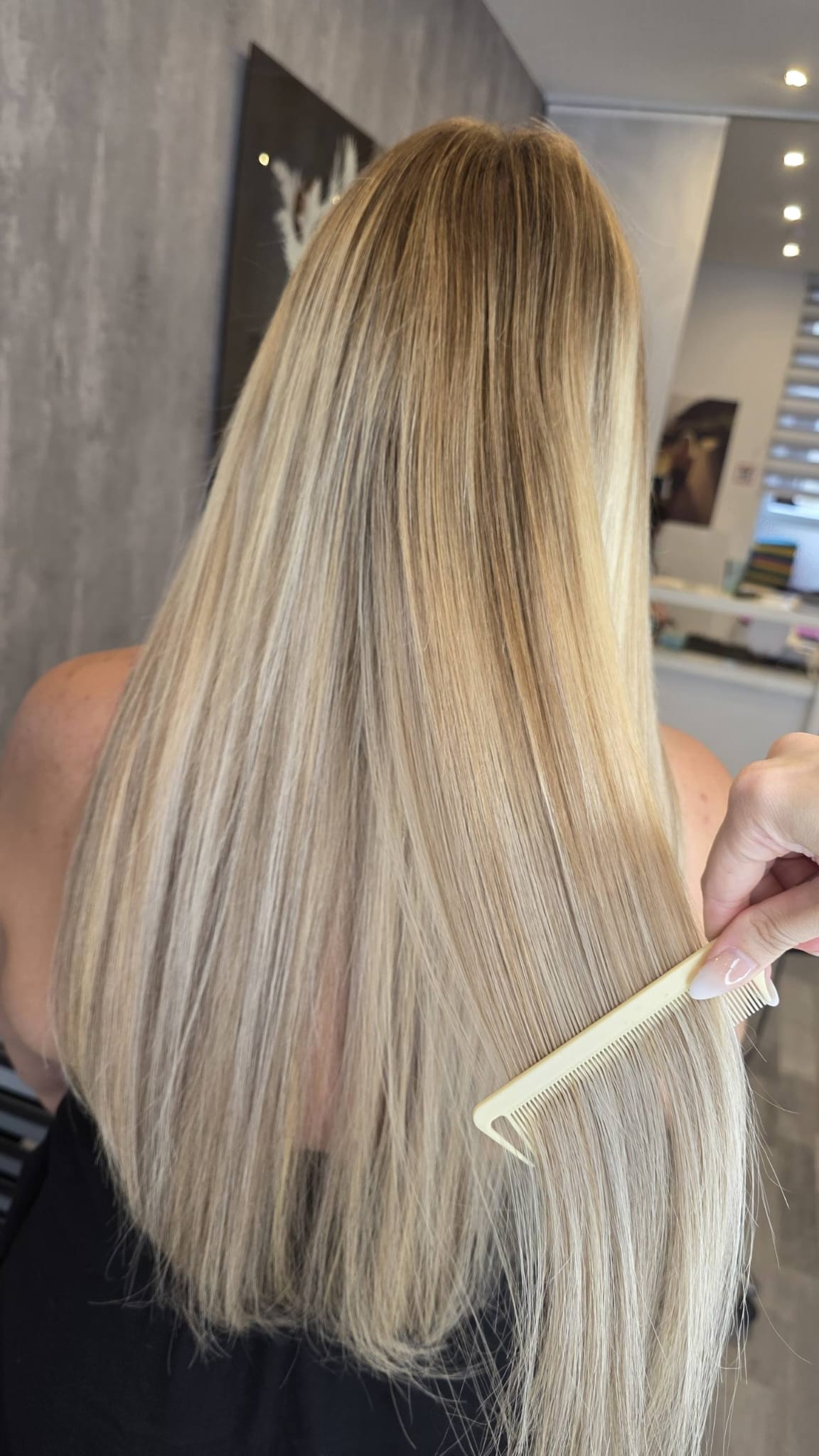
Entanglements arise not "just like that".
They are almost always the result of:
- lack of control
- incorrect care
- missed appointments
With the right care, maintenance and regular cleaning cuts, your extensions will last:
✔ Soft
✔ clean
✔ Of course
✔ Durable
If you are unsure or notice the first nodules, it is better to get in touch early - the sooner the better.




 English (UK)
  Deutsch
  Русский
  Italiano
  Français
  Nederlands
  Español