
Scalp conditions and psoriasis with extensions – tips for a healthy scalp

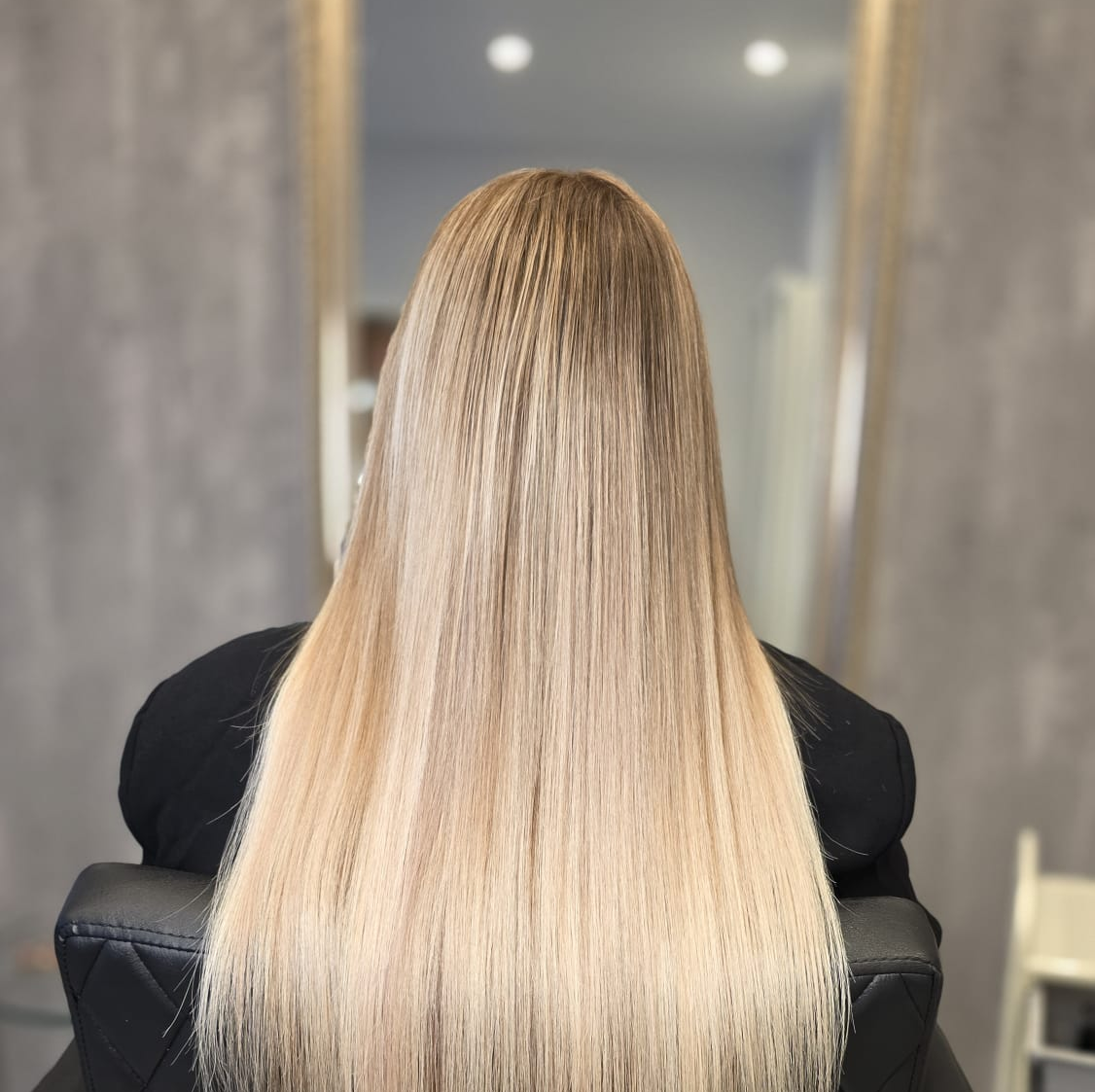
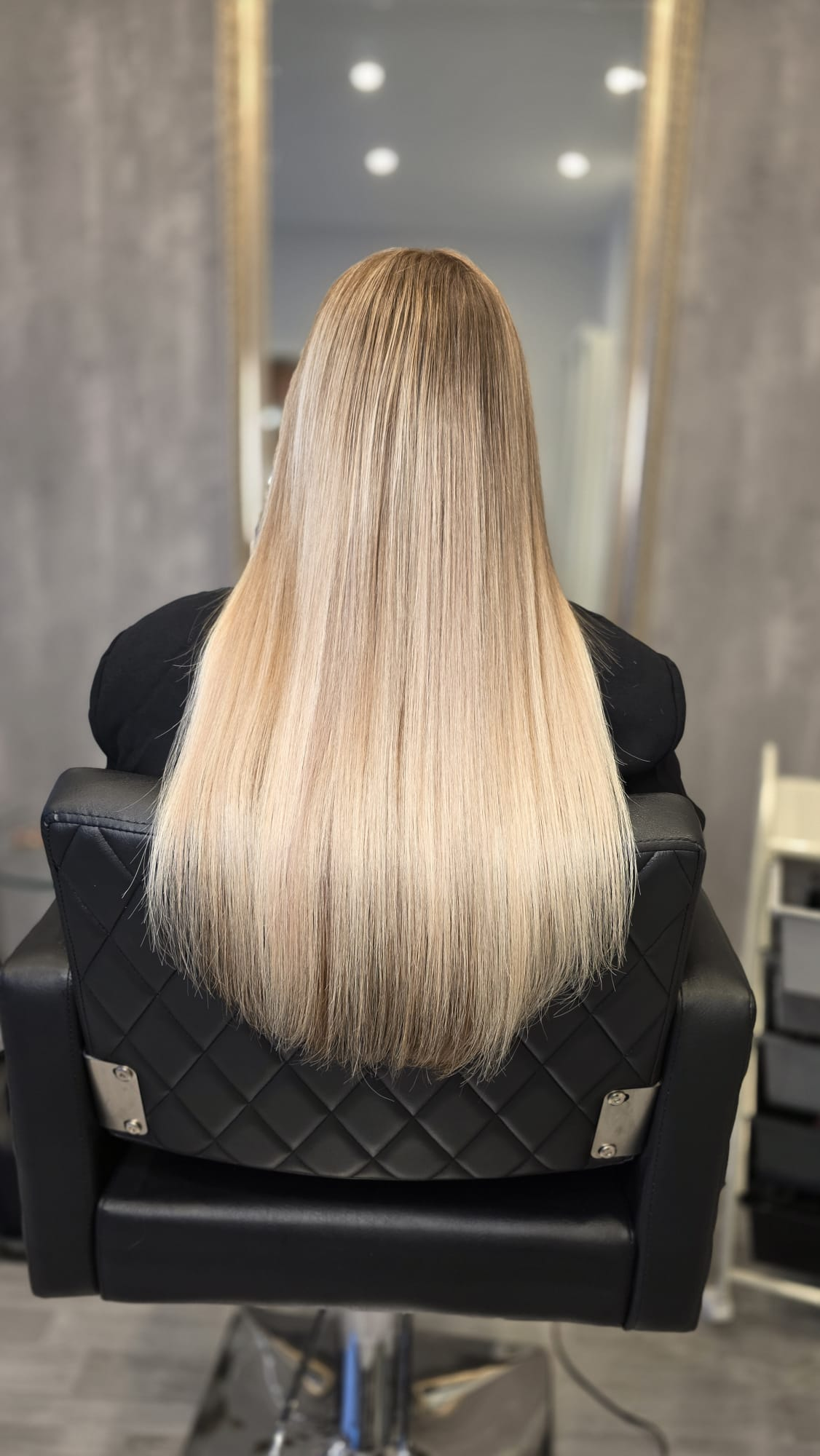
Extensions are a fantastic way to add length, volume and fullness to your hair. But many wearers wonder: Do extensions affect the health of my scalp?
In this article, we explain the most common scalp conditions with extensions, what to look out for, and specifically how psoriasis can affect the scalp. We also provide tips on how to [sentence incomplete]. healthy and gentle carries.
1. Common scalp problems with extensions
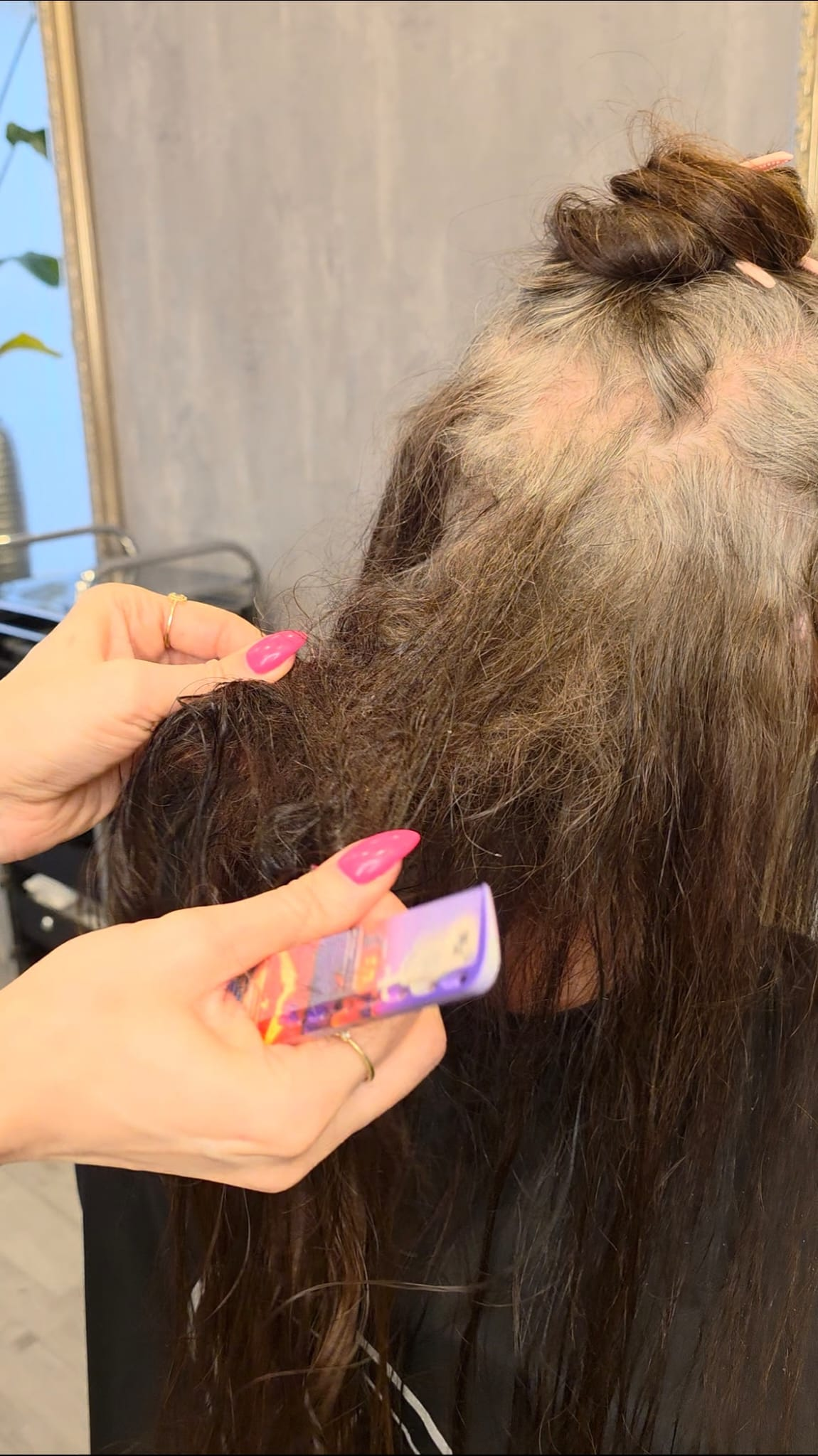
Extensions themselves do not cause illnesses. However, they can exacerbate certain problems due to the additional stress at the root:
Itching and irritation
Often too tight Bondings or clip-in extensions
Wrong care products, such as silicone-based shampoos, can irritate the scalp
Flaking
Dry scalp or insufficient cleansing can lead to dandruff.
Hair falls out with bonding extensions hanging between the strandswhich can intensify scaling
Fungal infections or eczema
Rare, but possible on a damp or irritated scalp
SymptomsRedness, itching, small blisters, or flaky skin.
TipSee a doctor or dermatologist straight away
2. Psoriasis of the scalp
Schuppenflechte ist eine Hautkrankheit chronic skin conditionaffecting the scalp. Typical signs include:
- Redness and inflamed areas
- Silvery-white scales
- Itching or a feeling of tightness
In psoriasis, the skin renews itself very quickly, causing Scales and inflammation develop.
Extensions themselves do not cause psoriasisbut can additionally burden the scalp if the condition is active.
3. Scalp risks with extensions
Bonding extensions or clip-ins can have the following effects:
- Tensile load at the attachment
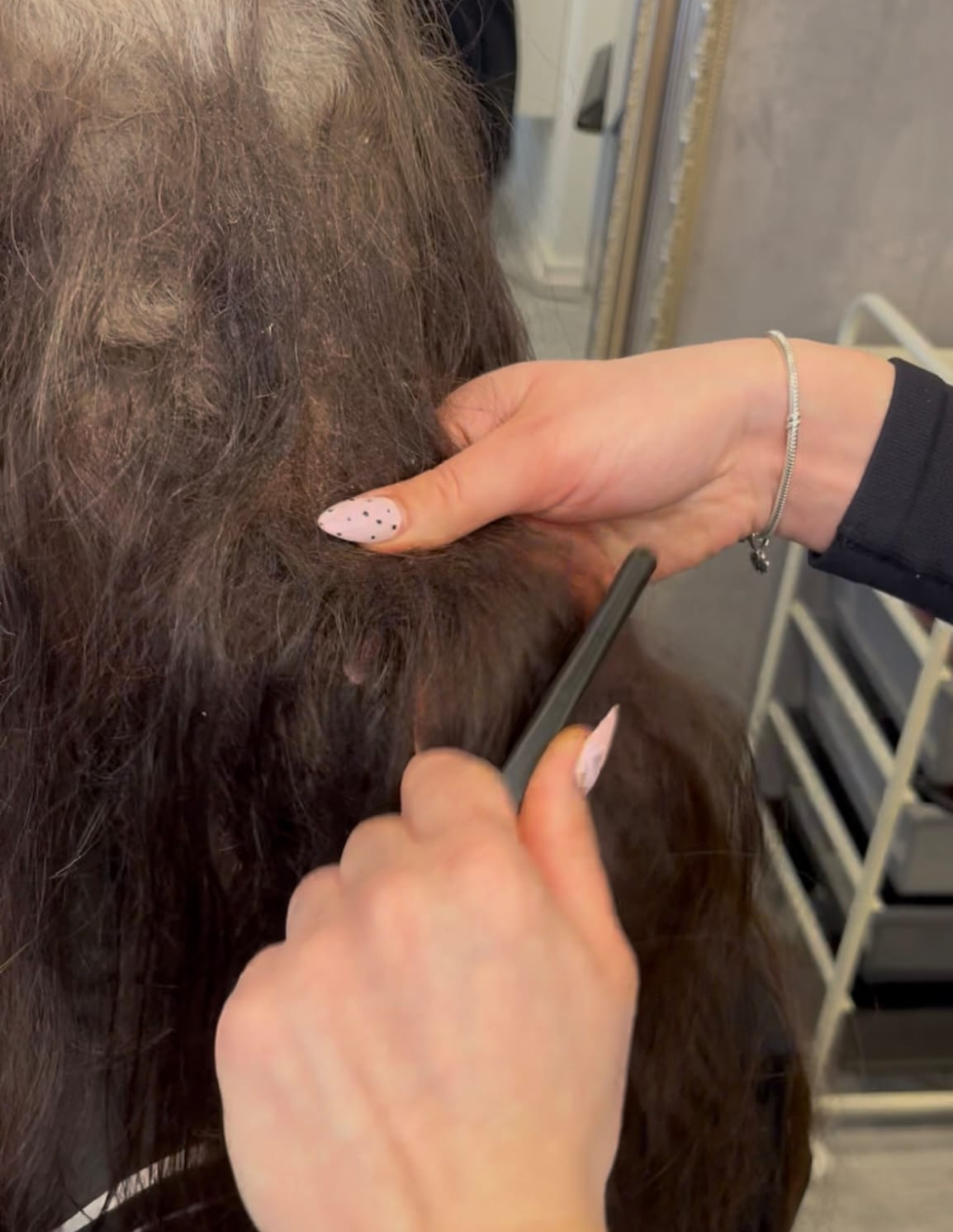
- Mats caused by shed hair
- Irritation from incorrect skincare products
When psoriasis is active, the scalp is more sensitive, so extra care is necessary.
4. Tips for a healthy scalp with extensions
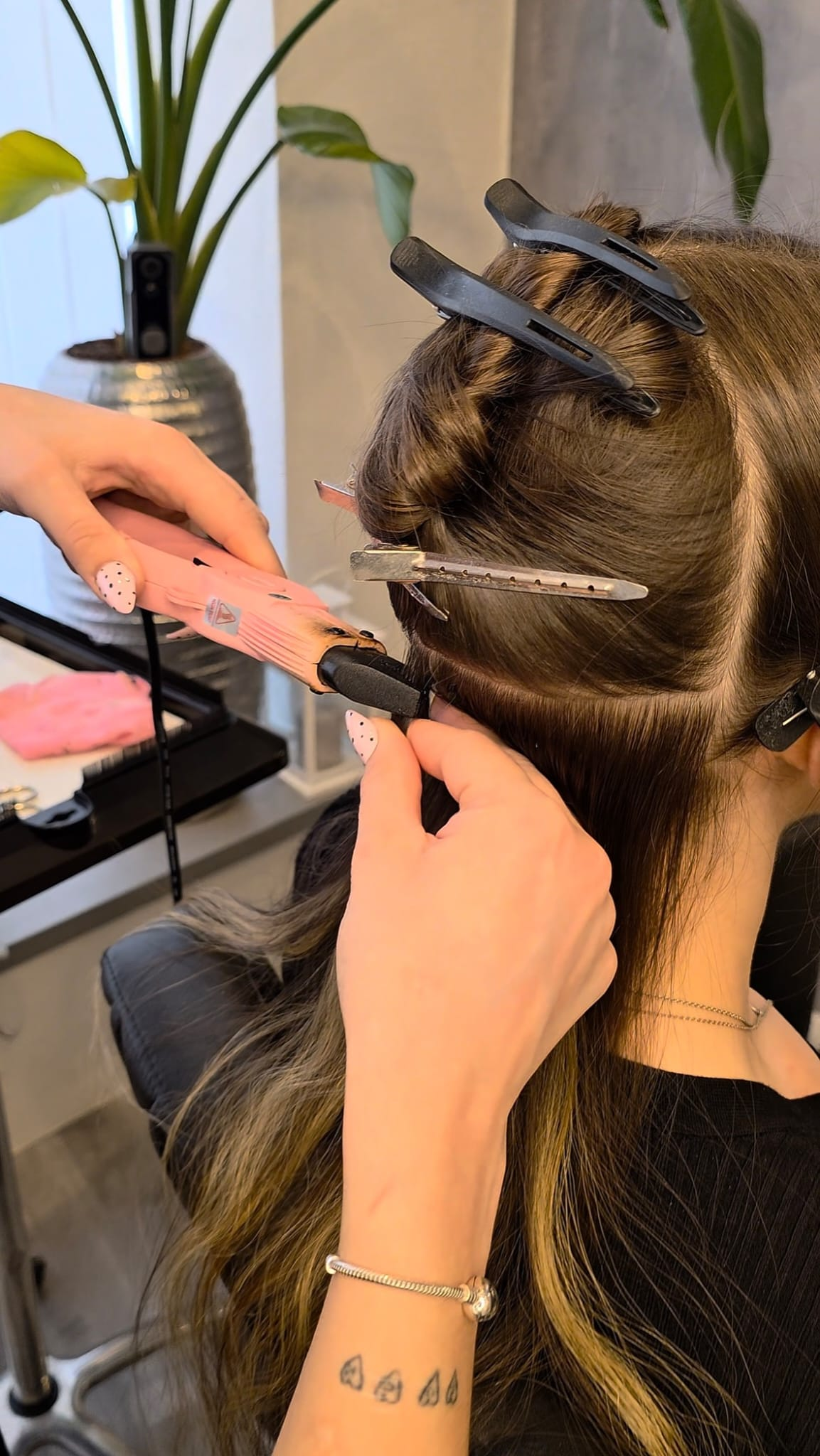
Before applying the extensions
- Consult a dermatologist to stabilise the scalp.
- Psoriasis should be kept under control as much as possible
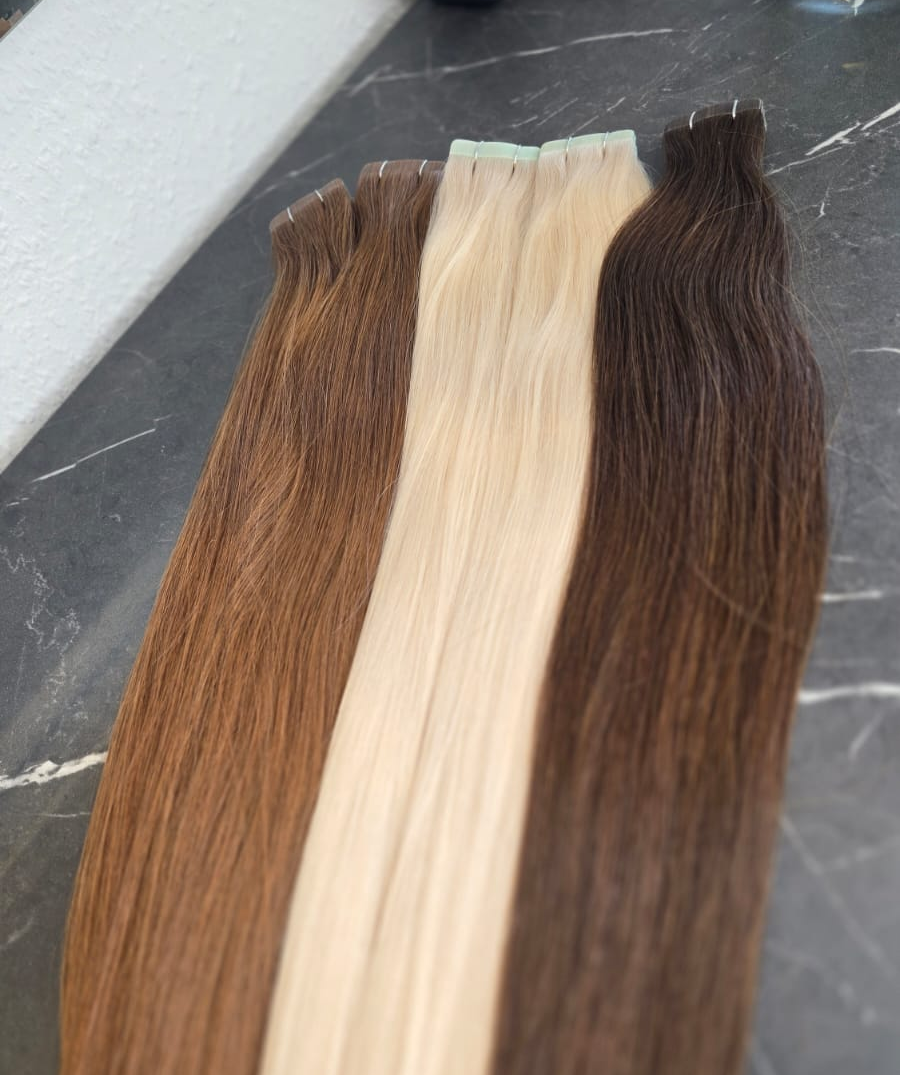
Choosing extensions
- Apply bondings carefully, not too close to the roots.
- Choose light strands to reduce tensile stress
Care while wearing
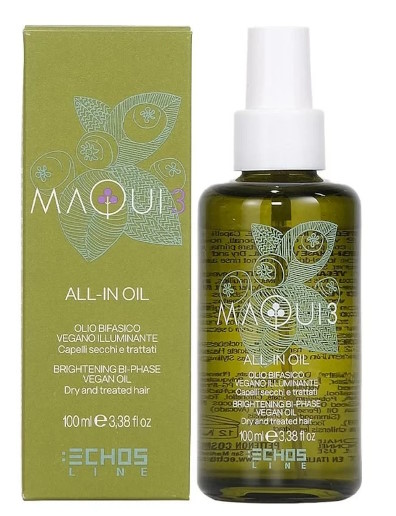
- Use gentle shampoos without harsh chemicals
- Regular trims to remove split ends and tangles
- Use soft hair ties to avoid pulling at the roots
Professional inspection
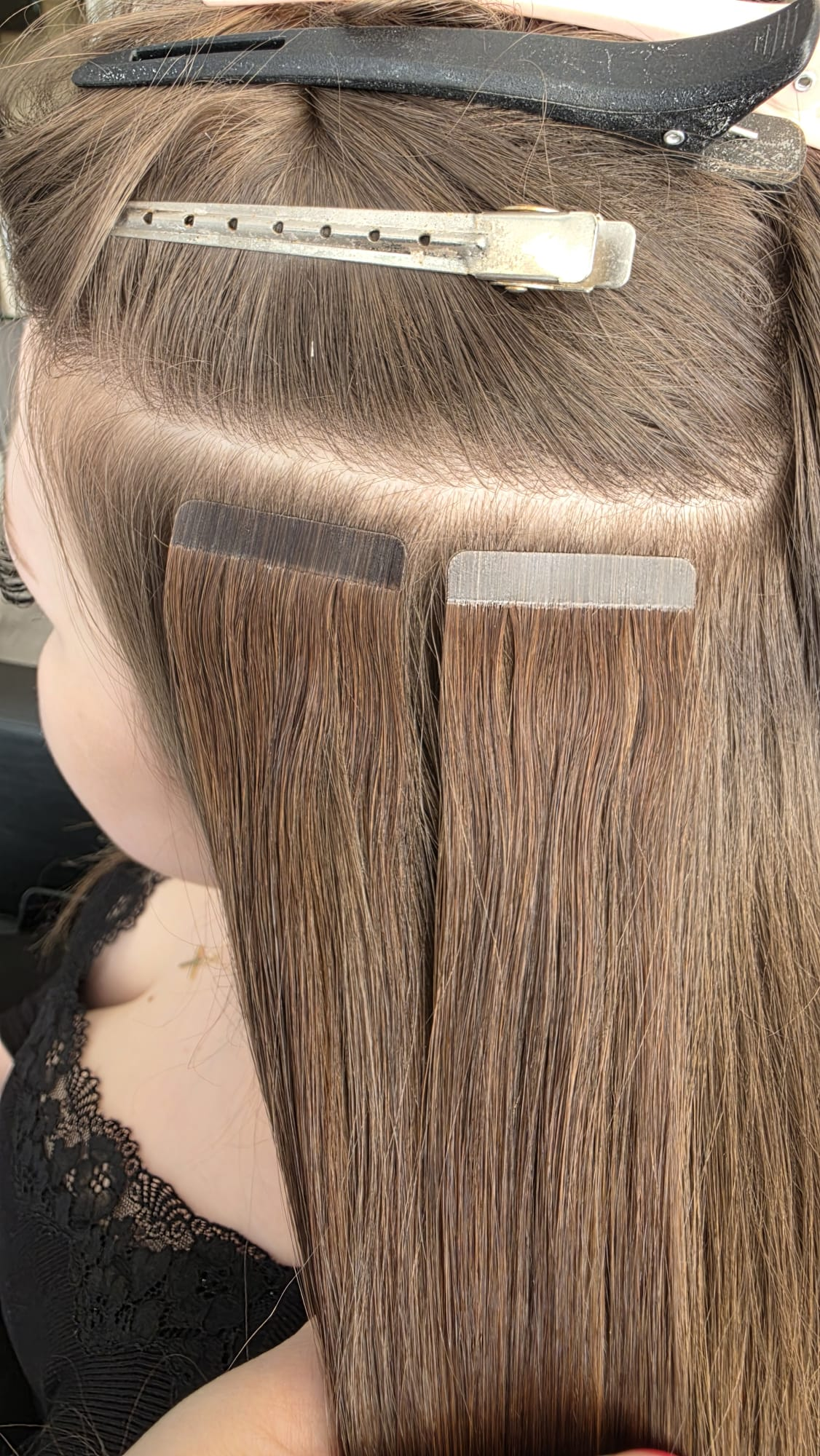
- Have your bondings checked every 6–8 weeks
- If irritation or severe itching occurs, temporarily remove extensions if necessary.
What happens if the scalp is ignored
Untreated scalp conditions or active psoriasis can lead to the following problems with extensions:
- Increased itching and irritation
- Matting at the root
- Loose bonds or hair breakage
- Shorter duration of extensions
Conclusion
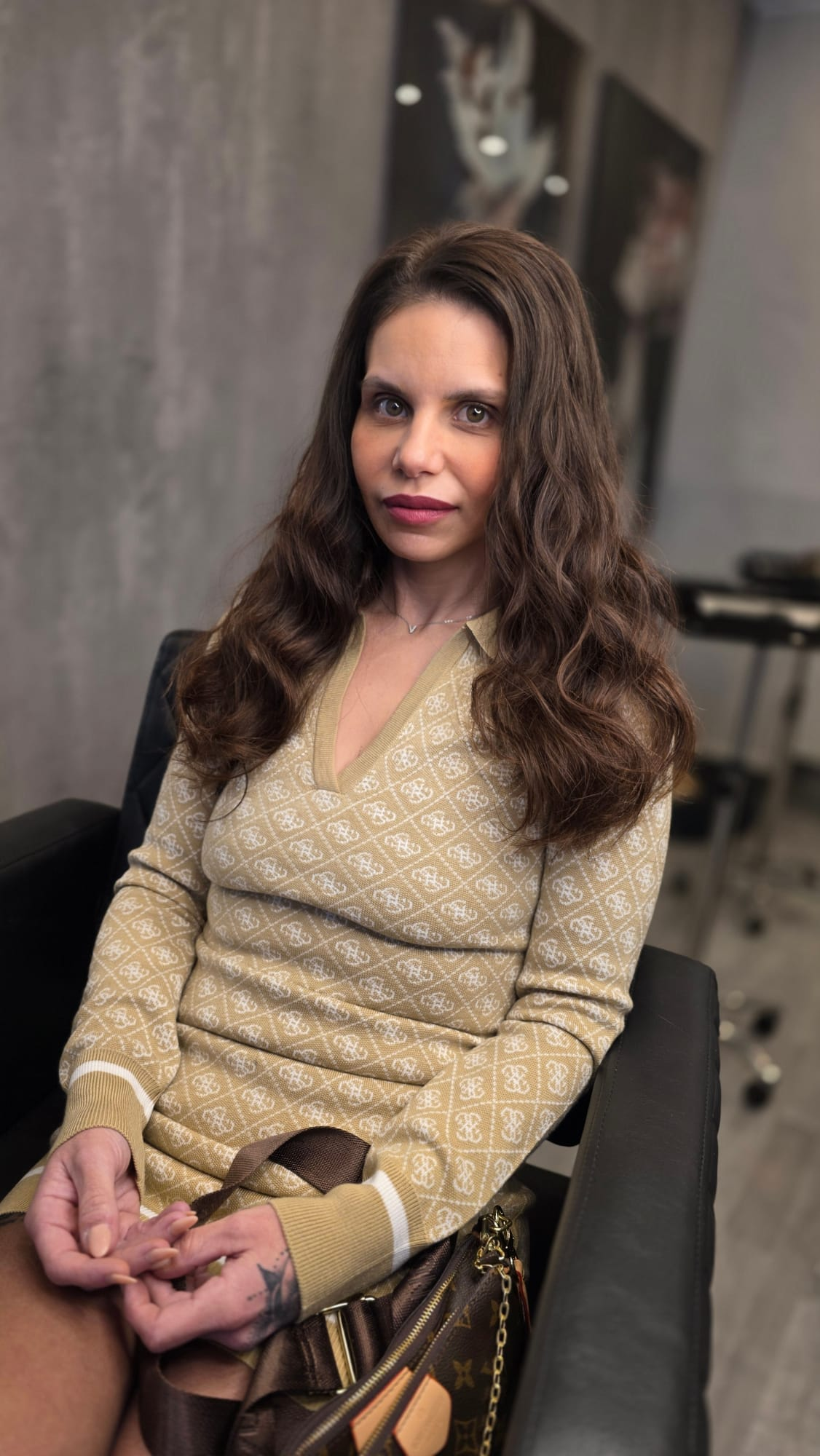
Extensions can can also be worn for illnesses of the head or psoriasis – if the scalp is stable and well-maintained.
The important thing is:
- Consult a dermatologist with active disease
- Carefully apply bondings and check regularly
- Use gentle skincare products
- To use free cuts and soft styling methods
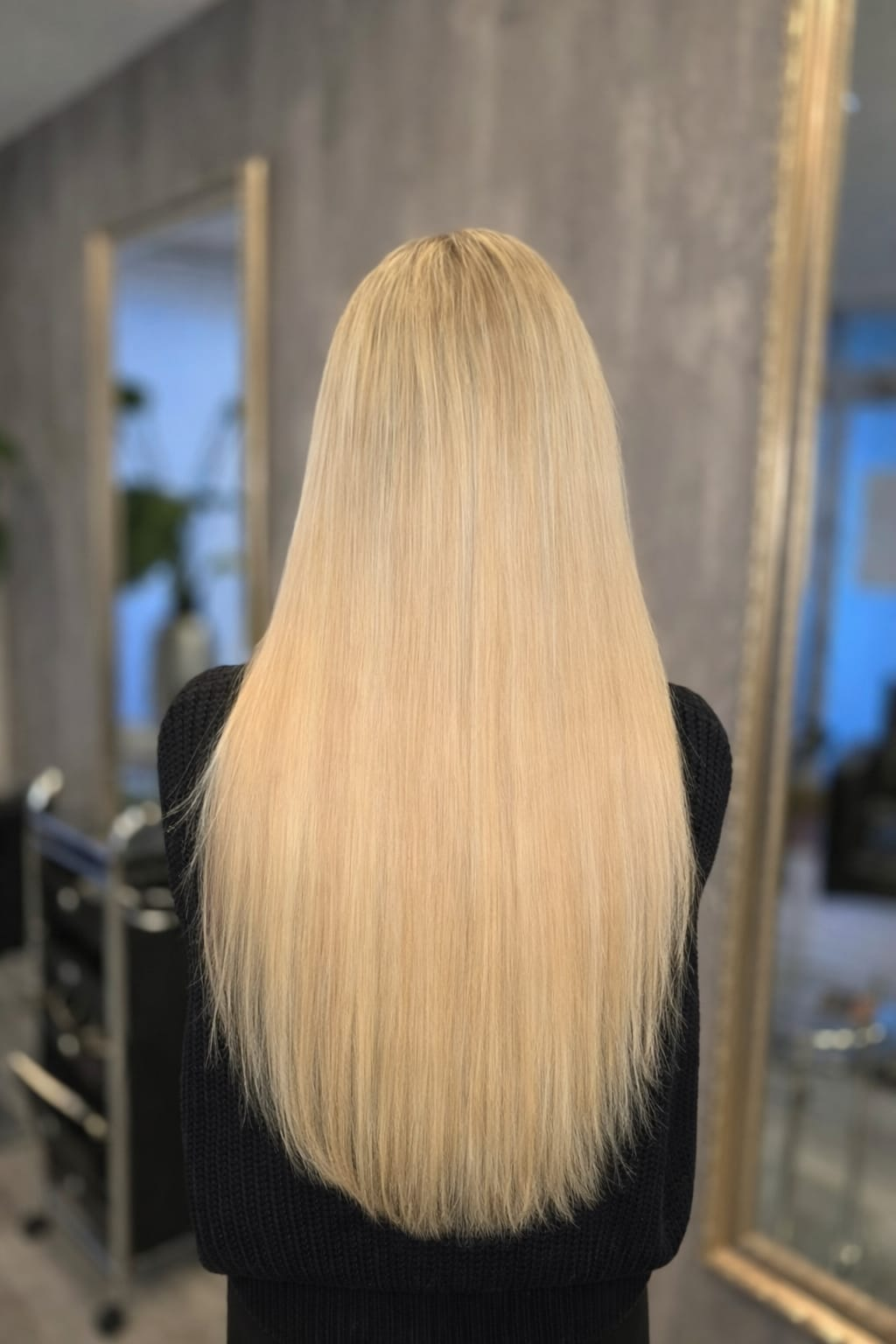
This keeps extensions looking good, the scalp healthy, and hair volume maintained.

 English (UK)
  Deutsch
  Русский
  Italiano
  Français
  Nederlands
  Español